
The Woodbury/ Subject Files for —
Won't you consider becoming a member of the Historical Society? We can't do our work without your continued support! CLICK HERE to download the Woodbury Historical Society Membership and Donation form. Thank you! —
— Woodbury The Gatehouse
|


During the turn of the twentieth century, many wealthy people saw Woodbury as a desirable location to build pastoral estates. The factors that made it an attractive location included its scenic placement in the Hudson Highlands, its proximity to New York City, and convenient transportation via the Erie Railroad. Among the rich and famous who settled here was Frederick Freeman Proctor who earned the title of the “Dean of Vaudeville”– devoting more than 50 years to the theatrical world. Owning more than fifty theaters along the East Coast, Proctor pioneered the technique of "continuous vaudeville” which involved bracketing silent film screenings with live entertainment from the form’s heyday.
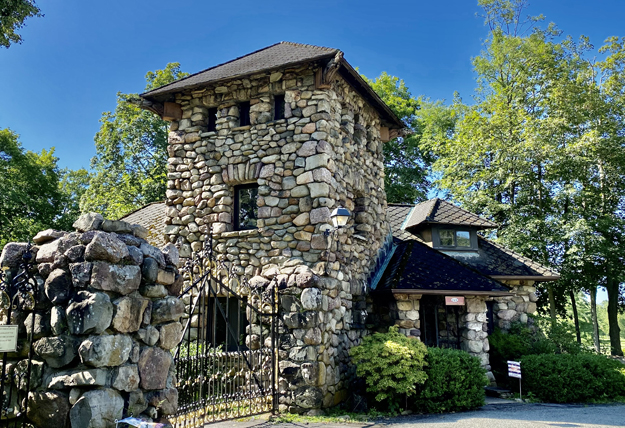
In 1912, Proctor built his estate, Proctoria, on 1142 acres of land in Central Valley. He 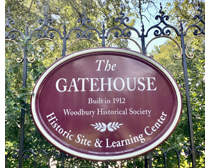 constructed five large homes, various barns, and “The Gatehouse” which marked the impressive entrance to the estate. Following Proctor's death in 1929, the estate was put up for sale. It was acquired by the United States Military Academy (West Point) shortly after WWII. All the buildings, except the Gatehouse and small Carriage House directly behind, were destroyed so the lands could be used for military and parachute maneuvers.
In 1973, the U.S. Government deeded the Gatehouse to the Town of Woodbury to be used for youth activities. Until the 1990s, the Parks Commission used the Gatehouse for small group activities and the Boy Scouts used The Carriage House. However, budget restraints made it impossible for the Parks Commission to make major renovations to the building and the fate of The Gatehouse was unclear.
In 1996, the Woodbury Town Board crafted an agreement by which the complex would be renovated. The Woodbury Historical Society, which was in need of additional space, and the Boy Scouts, who needed meeting rooms, worked jointly to achieve this goal. WHS currently uses The Gatehouse for additional exhibit space along with the Woodbury Community Association. Likewise, the Boy Scouts use The Carriage House for their troop meetings.
In 2005, renovations of the building’s structure and interior were completed and the Gatehouse was officially opened to the public. Seven years later, the last restoration items were completed with the repainting of the Iron Gates and mounting of the restored early 20th-century lantern which went missing from the structure long ago.
The Gatehouse Museum and Learning Center activities began in 2005 as a committee of the Woodbury Historical Society. This committee documented the building’s renovation for historical preservation and visitor information in an inaugural Gatehouse photo album. Part of the renovations included the installation of the Remembrance Garden, an outdoor patio of commemorative inscribed bricks that have greatly enhanced the landscape of this historic location in Woodbury. Today, The Gatehouse Museum & Learning Center holds yearly exhibits relevant to Woodbury history and partners with other local organizations such as the Woodbury Public Library.
Gatehouse Site Chairperson:
Joanne Calore
Gatehouse Committee Members:
Rhonda Fabbro| Natasha Dillard Wozniak
"LIGHT THE LANTERN"
Since 1996, the Gatehouse Committee has focused 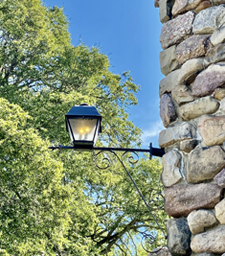 on renovating and restoring this Tuscany-style stone building from 1912. As of recent, their final exterior project was the replacement of a lantern which once graced an exterior pillar and marked the entrance to Proctoria. On the 100th anniversary of the estate’s completion in 2012, the committee announced the “Light the Lantern” project and fundraiser.
Thanks to the generosity of our community, we were able to raise the funds for this restoration project over a few months. The lantern has now been installed at the Gatehouse and our thanks are extended to all who supported us in this endeavor.
NEW EXHIBITIONS
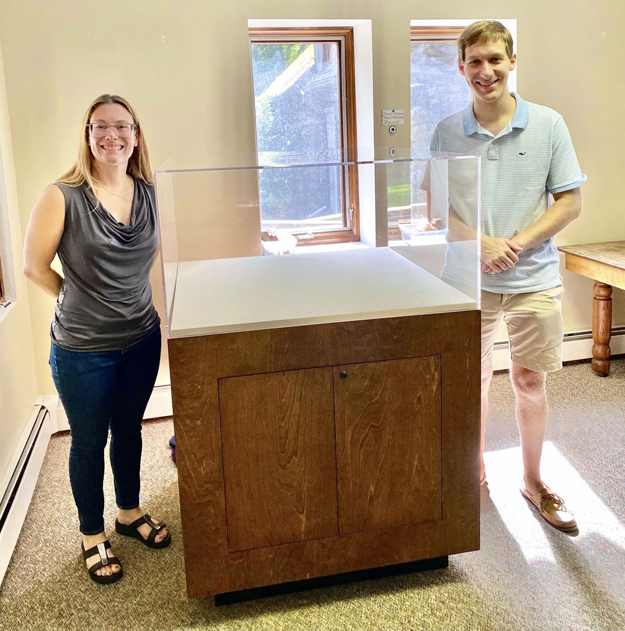
In 2023, the Woodbury Historical Society appointed Joanne Calore as its new Gatehouse site chairperson, following the retirement of Dorothy Morris. Following several years of disuse due to COVID-19, the site had to be carefully prepared for new exhibits. This was helped with the gracious donation of two museum-grade display cases from the West Point Museum. Joanne and President Alex Prizgintas are shown above with one of these new cases.
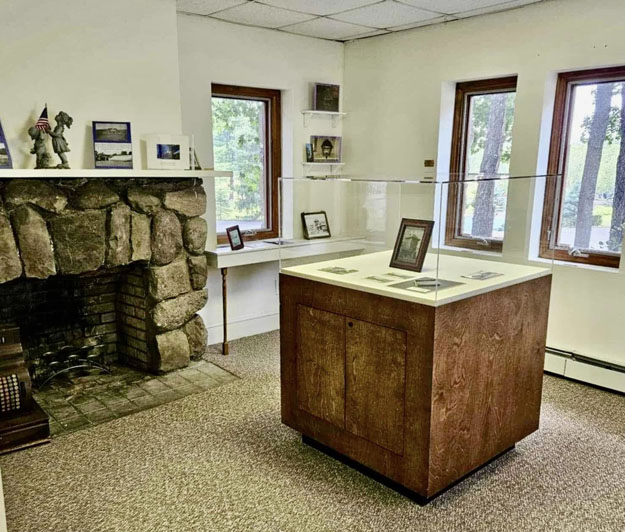
The Woodbury Historical Society’s Gatehouse Committee stewards the Gatehouse's first floor and select rooms of its second floor. Where the Rushmore Memorial Library Building acts more as a repository for our archives, The Gatehouse is where formal, rotating exhibits are assembled.
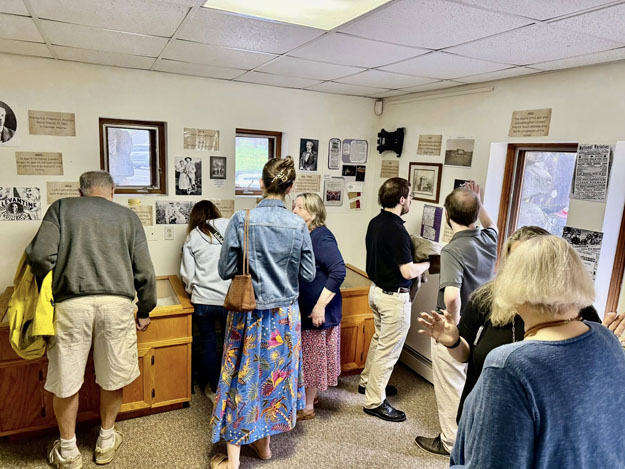
Attendees of The Gatehouse Museum & Learning Center enjoy the F.F. Proctor room in 2024.
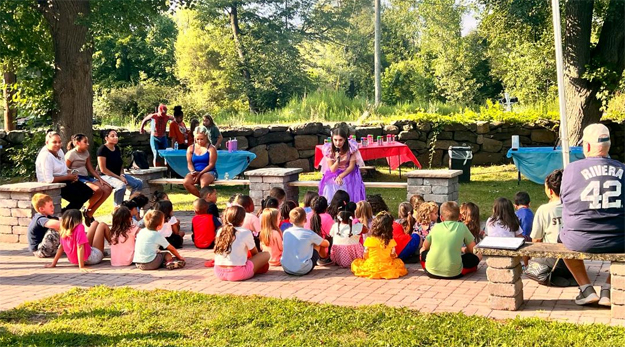
The Gatehouse Museum & Learning Center often partners with local organizations, such as the Woodbury Public Library, in organizing events on its grounds.
CLICK HERE FOR GATEHOUSE EVENTS
| © Woodbury Historical Society | All rights reserved. Designed and maintained by e-Diner Design & Marketing, Inc. |